State school

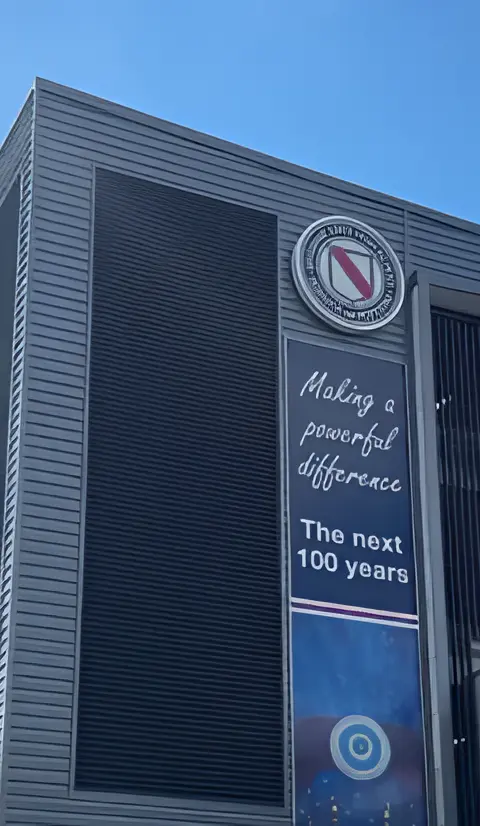
Queensland Academy for Science Mathematics and Technology

78 Bywong Street, Toowong

22 reviews: 16 alumni, 6 parents. Full stories, no rankings or overall ratings.

Read the reviews free

At a glance

The facts, without the digging

Fees

Minimal fees

Queensland state school Student Resource Scheme

Sector
State
Year levels
Year 10 to 12
Students
1,358 (Aug 2025)
Gender
Co-Ed
Established
2007
Boarding
No
Principal
Kathryn Kayrooz
Motto
Inspiring great minds
Website
qasmt.eq.edu.au

Figures come from publicly available sources, checked against what families tell us.How we check our data →

Location & catchment

Where it is, and who gets in

Getting there

78 Bywong Street, Toowong QLD · View on map

Catchment boundaries can shift and don't always match local assumptions. For the current official boundaries, check the Queensland Government's eDMap tool.

Reviews

The story of this school, told by 22 families

We don't rank schools and we don't hand out an overall score. Every review here is a personal experience from a parent or recent graduate.

2 of 22 reviews are free to read. The rest are free with an account.

S, T · Alum · Graduated recently (2022, 2023, 2024)
Free preview

Would you recommend it?

Although there are many things that needs to be considered when selecting IB (ATAR conversions, whether you are planning to study domestic vs international), overall, I would still recommend QA to students if they enjoy working with like minded peers and work well under pressure. The teachers really have a passion for their job, and it shows through their interaction and willingness to help their students. However, I do agree that IB places too much stress on students, so therefore I only recommend the school to students that are up for the long term challenge. Other pros for the school includes the fact that the 80% of the students are also dedicated and hard-working which creates a sort of competitive/encouraging environment that is hard to find in other schools. Furthermore, there is hardly no stigma around being "nerdy" or trying hard, which is also uncommon in most high schools. As for extracurricular activities, QA does not place a huge emphasis on sports as participation for extracurricular activities is less than the average school.

What had the biggest impact

The school environment and constantly being surrounded by people that are also so hard-working and motivated definitely had the largest positive impact on me in terms of encouraging me to achieve my best. IB is an extremely academically demanding program, and as a result, my last final 2 years really tested my ability to time manage, balance my extracurriculars and work efficiently. These skills I feel have allowed me to find strengths and weaknesses in studying which was useful in university. Furthermore, as a result of school's emphasis on STEM, students at SMT often get the opportunity to join many university based programs, listen to specialists and attend seminars, all of which I know has inspired many students to pursue a career in STEM> Overall, my interactions with my teachers, and their willingness to always help, as well as their genuine passion for teaching has left a lasting impact on my view on ability to communicate my problems and seek help. I know the teachers at SMT has not only inspired but also challenged the students to always keep learning.

Show moreShow less

Preparing for entry

Although the entrance exam was a academic competitive selection process, the exams for QA are difficult to prepare and get tutoring for. As maths was my strong subject, I did not receive external help on that but rather just focused on refining my ability to write under short times. As for the interview, it was mainly for the school to get to know you as a student, and it is almost impossible to fail the interview stage.

Year 12 subject choices

Biology (HL), Chemistry (HL), english (SL), economics (HL), japanese ab initio. I always liked the 2 sciences bio and chem and would not change any of my subject selections. Overall, these subjects were not too difficult to learn and score high marks in. Scaling for different subjects also does not exist for IB, so high marks in arts scales the same as in chemistry, which might be a plus for some students. Subject offered at SMT is quite limited.

Getting extra help

Very accessible. There are plenty of support systems SMT students had access to. Not only did they run peer tutoring sessions during lunchtime, but also students often visited teachers during the teacher-run tutorials during break times. Along with that teachers often host after school or before school classes to provide additional support to students. THe school also hires alumnis to share study tips, and even to teach students after school.

Readiness for life after school

Very prepared. The academic rigor of the school, along with the stress, and difficulty definitely made me more than capable to face university. Most students have developed good study habits find first year of university very easy. The school also hosted and invited many career expo/experts, so students were very well equipped with career advice.

Subject range and curiosity

There was a greater focus on STEM subjects (sciences maths) over arts and other forms of creative subjects. The subjects offered leaned towards the more objective options, tehrefore there was limited opportunities to engage in creativity.

Bullying and getting to school safely

Overall, bullying rates at the school are quite low due to the large percentage of students being too busy focusing on their academics. However, in the instances when bullying does occur the school has a really good system of house deans/councillors which takes bullying very seriously, and works fast to mitigate the situation. The system that the school employs takes the students concerns very seriously, so bullying is never a big issue. As well as bullying, the school also takes mental health issues very seriously and the house deans/councillors are all very supportive and attentive to student concerns and problems. The Toowong area is also quite safe, as the surrounding areas are just suburban houses. Unless you are crossing illegally on moggil road, the school is not located near any suspicious people/areas and is generally really safe.

Camps and excursions

The school culture is probably the most strict and competitive out of all schools in Queensland. All students that enter have entered via selective entry, and as a result there is a huge emphasise on academic achievement. The school also promotes competitive by having yearly academic rewards and ranking systems, which can get really toxic as most students are competing for the gold/honours. This also meant that students would judge each other based on GPA and grades a lot. It is also very easy to make friends, as everyone is generally really open and supportive.

Something only students would know

Some things unique to the school is that doing QA/IB is a lot different from ATAR curriculum, in that there is a lot of independent learning that needs to be done. Therefore, I would not recommend the school for students who struggles to understand concepts or work off/ search for their own online resources. Furthermore, diversity is really big in QA, so there is a huge emphasise on sharing cultures and celebrating differences, which I really enjoyed. Extracurricular activities such as robotics are also very popular in QA, and students often spend their lunch times either attending the clubs for these activities, or involving themselves in clubs for service, or even beekeeping. The SMT community is also very small and everyone basically knows eachother. Students are also very willing to help others.

Coaching and chances to compete

Coaches hired were usually just alumnis, and there were hardly professional coaches. Students were given the chance to train and develop, however, these opportunities were few.

Chances to take part in the arts

There were no drama clubs. However, the school does encourage art production as they host a popular festival of creativity once a year, which encourages students to submit artwork and to perform dances. The school also has a strings and band ensemble.

  • Played sport: No
  • Did an arts activity: No
  • Emphasis on academics ◆◆◆◆◆
  • Quality of academic resources ◆◆◆◆◆
  • How healthy the tuckshop is ◆◆◆◆◇
  • Investment in sports facilities ◆◆◆◇◇
  • Quality of arts teachers ◆◆◆◇◇
  • Focus on showcasing talent ◆◆◆◆◆
Alyssa, T · Alum · Graduated recently (2022, 2023, 2024)
Free preview

Would you recommend it?

QASMT is a school where the experience greatly depends on your character. It is fast-paced, competitive and highly academic-focused. If you thrive in these environments and are disciplined and self-motivated, I would highly recommend QA to you. Not only are you surrounded by like-minded students whose focus is all on achieving good grades, which in turn motivates you to work harder, but the school provides an abundance of academic-based opportunities such as clubs and events to increase your knowledge. On the other hand, if you tend to procrastinate or are not very disciplined, QASMT will likely be more harmful than good. It is incredibly easy to fall behind on studies due to the difficult nature of the IB program, and I, along with many others, were burnt out and sleep-deprived, particularly in the senior years. The IB program demands much more than the ATAR system- we have to write an extended essay, do philosophy (TOK) and undergo the CAS (creativity, activity, service) program on top of the six regular subjects. Additionally, the subjects offered at QA are much more restricting than other schools. Ultimately, whether I recommend QASMT depends on the person. If you work well under high pressure and can stay on top of your studies, then I would recommend it as it provides an environment where you can shine. On the other hand, it is incredibly demanding and stressful, so if you struggle with procrastination or do not care much for academics, then QASMT is not for you (and that's okay!).

What had the biggest impact

Teachers had a massive impact on the students, and it was obvious through the students' grades. For example, in Grade 10, one of the science classes had a much higher fail rate than the rest of the other classes for an exam. The difference? The teacher. I had friends from that class improve substantially the following term when their teacher left and a new one came in. Although my experience wasn't as dramatic, teachers were still incredibly important. While some teachers helped me understand the concept immediately, others like my chemistry teacher were confusing and I ended up having to resort to external tutoring to understand. It was also a shame that the school had a high staff turnover rate. I had three different English teachers in Grade 11 because they kept leaving. This was particularly frustrating as personal feedback (e.g. feedback on progress over different exams) is incredibly important in subjective subjects such as English. When new teachers come in, they know nothing about you or your knowledge as a student, and thus their feedback is limited and may not be as helpful as it could be.

Show moreShow less

Preparing for entry

I did not do any specific preparation solely for the entrance exam. However, in the years leading up to the exam, I took tutoring classes including both private and public ones like Kumon. As the exam tested academic areas including writing and mathematics skills, I would say tutoring was especially helpful.

Year 12 subject choices

My subjects were: English HL, Biology HL, Psychology HL, Maths AA SL, Chemistry SL and Japanese Ab Initio. I chose these subjects based on what I was good at and what I enjoyed. This was based off my previous grades and general interest. It also helped that the higher levels that I chose had some overlap- for example, some biology and psychology topics were the same, like neuroscience, so for me it was a good choice. However, I know some people strayed far away from that combination because biology and psychology HL were two subjects that were incredibly content-heavy and required a lot of memorisation. Ultimately, subject selection is all about playing to your strengths. If I could turn back time, I would've done AI SL instead of AA SL for maths. As a law student, I do not require a high level of maths. AA SL is more complex and difficult than AI SL but does not count as a "higher level" requirement. Therefore, as I didn't need AA SL as a prerequisite for my university degree, AI SL would probably have been a better option as it would be easier to get a good grade, which is what I needed. However, it is worth noting that unlike the current system that accepts students from Grade 7, when I arrived they only took Grade 10s, so I didn't have any chance to try out junior subjects that would have allowed me to make a more informed decision on what my subjects and higher levels should be.

Getting extra help

A benefit to QASMT is that it provides a lot of academic support. Tutoring with alumni, and peer mentoring during lunchtime and after school were all offered and encouraged. Teachers cared about the students' learning and would often give up lunchtimes and after-school hours to aid students in their education. If students weren't passing their courses, they would be required to undergo mandatory tutoring. Similarly, the school would reach out through email to students with low grades to offer help and resources.

Readiness for life after school

I was well prepared for university after high school. In fact, my first year at university felt like a breath of fresh air in comparison to my time at QASMT. For example, at QA, due to the IB, we had to undergo the CAS program. This meant that we were required to have creative hobbies (writing, art etc.), do activity (sports) and service (volunteering, charity work etc.) on top of school. This helped to enhance personal and interpersonal development in all areas rather than just academics, which aided in preparation for university. If you're able to make it through QA's rigorous program, you'll be prepared for life after high school!

Subject range and curiosity

QASMT wasn't the best at variety in terms of subject choices. It was very limited, and there was a strict structure for the selection process (for example, everyone had to do a language). Additionally, in my grade at least, the school removed subject options such as the Arts in Grade 11 since there were a low number of students that did it in Grade 10. Those students were then forced to pick up another subject, such as chemistry, instead. To be fair, SMT in QASMT stands for science, maths, and technology. The subjects, therefore, reflect this in offering courses mainly in these areas. There were a lot fewer creative subjects that could be found in the other QA school, QACI (creative industries). Instead, it offered subjects such as ITGS ('information technology in a global society') which would probably not be found commonly elsewhere.

Inclusion and bullying

QASMT is very diverse with students from multiple backgrounds. Many cultural events were also held, including Harmony Week, where students are encouraged to wear their cultural dress and participate in related activities. Bullying, from what I could tell, wasn't a significant issue. In a school where academics is the priority, there's a stereotypical correlation between high-achieving students and good behaviour. This is supported by the fact that I never witnessed any bullying, but it should be noted that bullying is pretty much an inevitable issue, albeit less prominent at QA.

Camps and excursions

As mentioned previously, QASMT is highly competitive and academics-focused. Students strive for good grades, and this culture is supported by the school itself in the way that award ceremonies are constantly held and students are praised for their achievements. QASMT prides itself in this, additionally expecting students to maintain a high standard of dress and behaviour both in and out of the school with strict rules. Because of this, most students had the same mindset- do well and graduate with a high score. Although it was competitive, it was more the reason for students to band together and support one another. In a program like IB that's incredibly difficult, it was almost impossible for anyone to get through it alone- at least, that was my experience. I found that people were more than happy to help each other, sharing notes and teaching each other concepts. As the IB does not rely on a bell-curve grading system like the ATAR, this means that one person getting a high score does not make it harder for another person to do well. This is one thing that I appreciated- that we competed with ourselves to be constantly better rather than be in competition with others where people would ultimately be more selfish with resources etc. in order to do good.

Something only students would know

A privilege for the Grade 12s was that we got the cafeteria room to ourselves during lunch/afternoon tea. It was incredibly fun as it was spacious and had tables and beanbags for people to lounge on away from the hot sun outside.

Coaching and chances to compete

The volleyball program at QASMT was pretty laid back, with a lot of students and only one or two coaches, who were alumni, playing at once. We would go through skills and the coaches would offer help, but there was hardly any personalised coaching and it was more of a social club. I do believe, however, that there were also competitive teams which required tryouts and involved full-on training schedules and pushed for development. I can't speak much on this topic as I was not involved in it.

Chances to take part in the arts

Even though subjects like music and drama weren't an option, the school encouraged artistic expression through annual events such as the Battle of the Bands and Festival of Creativity, where students performed instrumental pieces, showcased their paintings etc. Due to a high number of applications, auditions were usually required, but I don't know anyone who applied and didn't get accepted. I was part of a creative writing club, with sessions held every Friday afternoon. I, along with other members, wrote stories and shared ideas together over the course of one to two hours. The school provides opportunities to create and establish clubs if it has enough support, so this is another way that students can be involved in the arts.

  • Played sport: Yes
  • Sports played: Volleyball
  • Did an arts activity: Yes
  • Arts activities done: Creative Writing
  • Emphasis on academics ◆◆◆◆◆
  • Quality of academic resources ◆◆◆◆◇
  • Investment in sports facilities ◆◆◆◇◇
  • Quality of arts teachers ◆◆◆◇◇
  • Focus on showcasing talent ◆◆◆◇◇
Loading reviews…

Why trust these reviews

Verified people, unedited opinions

Stories, not scores

We don't rank schools or average them into a single star rating. Each review is a personal experience of what a school is actually like. League tables can't tell you that.

Nothing softened

We don't edit opinions and schools can't pay to remove reviews. The good, the mixed and the frustrating all stay up.

Privacy protected

Reviewers choose how they're identified. We verify who they are. Readers only see what they choose to share.

Keep researching

Other schools families compare with QASMT

Still weighing it up? Read the full stories from the families first.

Public school reviews are free with a free account. One $289 pass unlocks every private school review on the site: one payment, no subscription, 14-day money-back guarantee.

Create your free account